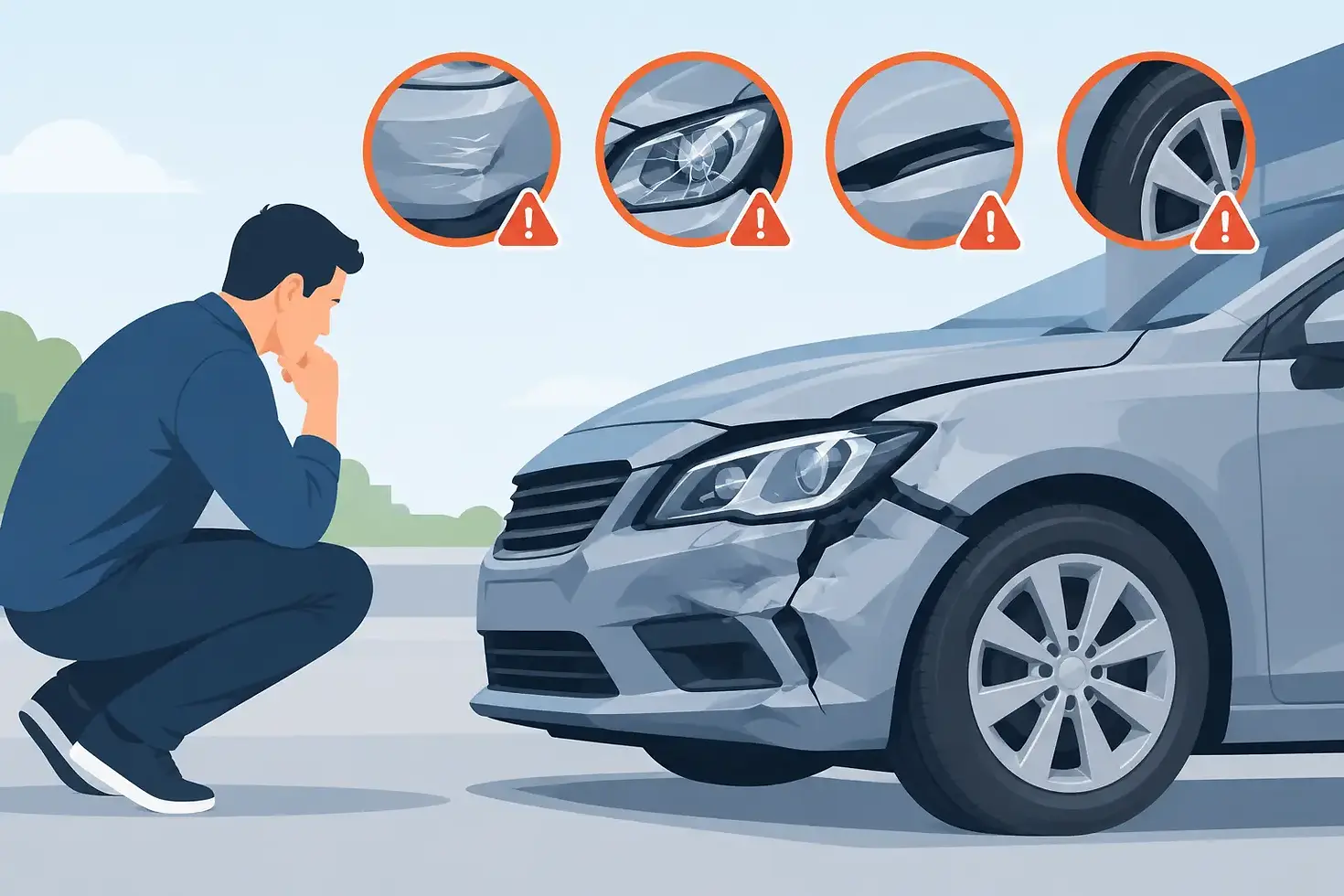
Collision Repair Warning Signs You Shouldn't Ignore

A bumper can look mostly fine after a parking-lot hit, yet the steering wheel may sit crooked on the drive home. A hailstorm can leave visible dents, but the bigger problem may be cracked paint that lets moisture reach the metal. These are collision repair warning signs worth taking seriously because modern vehicles hide a lot of structure, wiring, sensors, and safety equipment behind finished panels.
For drivers in Englewood and Denver's south metro, waiting can turn a manageable repair into a more expensive one. Colorado roads add their own pressure: UV exposure, freeze-thaw cycles, road grit, and mag chloride can quickly worsen exposed metal, broken coatings, and misaligned components. You do not need to be an auto-body expert to know when something is wrong. You do need to pay attention to what changed after the impact.
Collision Repair Warning Signs After an Accident
The vehicle pulls, wanders, or the steering wheel is off-center
If your vehicle drifts left or right on a flat road, needs constant steering correction, or has a steering wheel that no longer sits straight, do not write it off as a simple alignment issue. A hit to a wheel, curb, bumper corner, or suspension area can damage a control arm, tie rod, wheel bearing, strut, subframe, or steering component.
An alignment may be part of the fix, but it cannot correct bent or damaged parts. Continuing to drive can wear tires quickly and make the vehicle less predictable in emergency braking or wet conditions. This is one of the clearest collision repair warning signs because you feel it every time you drive.
Warning lights appear, even days later
A check-engine light, airbag light, blind-spot alert failure, parking sensor warning, or camera malfunction after an impact deserves a proper inspection. Many bumpers now contain sensors, wiring, brackets, radar units, and camera-related components. What appears to be a minor crack in the cover may involve equipment behind it.
Do not accept “the light was probably already on” as an answer without diagnosis. A qualified repair should identify the fault, repair the cause, and complete any required calibrations. Replacing a bumper cover without checking the systems built into it is not a complete repair.
New noises, vibrations, or rubbing sounds show up
Listen for clunks over bumps, a hum that increases with speed, scraping during turns, rattling from a door or trunk, or vibration through the wheel or seat. These symptoms can point to loose splash shields, damaged wheel components, broken mounts, bent brackets, misaligned panels, or damage behind the visible area.
A noise is not always a major structural problem. Sometimes it is a loose liner or a clip that needs to be replaced. But the trade-off is simple: a quick inspection costs far less than ignoring a small issue until it damages a tire, wiring harness, or suspension part.
Doors, hood, trunk, or tailgate no longer close cleanly
A panel that requires extra force to latch, sits proud of the surrounding body, rubs another panel, or has uneven gaps may indicate more than cosmetic damage. Hinges can shift. Latches can be damaged. A rear impact can affect trunk-floor structure, and a side impact can change how a door fits within the opening.
Pay close attention to weather seals, too. Wind noise, water entering the cabin, or damp carpet after rain may mean the vehicle is no longer sealing correctly. In Colorado, trapped moisture can create corrosion problems that stay hidden until they become much more difficult to repair.
Paint is cracked, chipped to bare metal, or bubbling
Paint is not just there to look good. It is the vehicle's first layer of protection against moisture, salt, sun, and contamination. If an impact cracks the finish, exposes bare steel or aluminum, or leaves a deep crease in a panel, the repair should address the damaged substrate as well as the color.
Bubbling paint is especially concerning. It can signal corrosion beneath the coating, often around a chipped edge, wheel opening, rocker panel, or previous repair. Rust does not improve with time. It spreads underneath paint, and it can require a much larger repair than the original chip suggested.
Damage You May Not See From the Outside
A vehicle can be drivable and still have damage that should be documented and repaired. That is common after low-speed collisions, curb strikes, and hail events. The exterior tells only part of the story.
Behind a bumper cover, there may be an absorber, reinforcement bar, mounting tabs, sensors, air guides, and wiring. Behind a fender, there may be liner damage, broken clips, damaged lighting mounts, or impact damage near the suspension. Underneath the vehicle, plastic shields can conceal scrapes to brackets, exhaust components, underbody panels, and suspension parts.
This is why a visual estimate is a starting point, not a promise that every issue has already been found. Once a shop removes damaged parts, it may uncover additional necessary work. That is called a supplement, and it is a normal part of repairing modern collision damage correctly. An insurance estimate is not a repair blueprint carved in stone.
Take clear photos of the damage before washing or disassembling anything, save claim information, and make note of any new drivability symptoms. If the vehicle feels unsafe, do not keep testing it on the highway. Arrange an inspection or tow instead.
Warning Signs of a Poor Collision Repair
The warning signs do not end when the vehicle is returned. A rushed repair can look acceptable from ten feet away while leaving problems that show up in sunlight, rain, or daily use.
Mismatched color, heavy orange peel, or rough clear coat
Color variation can be subtle, especially on metallic, pearl, tri-coat, and older finishes. Look at repaired panels in daylight from several angles. Check whether the metallic lays evenly, whether the panel appears darker or lighter than adjacent paint, and whether the gloss matches.
Some texture in factory paint is normal. But heavy orange peel, dry spray, dirt in the clear, rough edges, or dull patches are finishing issues, not something a customer should be told to ignore. A quality paint process includes correct preparation, color matching, blending when needed, cure time, and final finishing. On specialty work, wet sanding and flow coating can create a flatter, deeper finish than an ordinary production refinish.
Uneven panel gaps and unfinished edges
Walk around the vehicle slowly. Look along the hood, fenders, doors, bumper corners, trunk, and tailgate. Gaps should look consistent, panels should sit flush, and seams should not have overspray, tape lines, exposed fasteners, or missing clips.
Open every door and operate the hood, trunk, tailgate, windows, locks, lights, cameras, and parking sensors before signing off. A shop should not treat this as an inconvenience. It is part of checking that the work is complete.
Water leaks, wind noise, or loose interior trim
After a repair involving doors, glass, roof rails, quarter panels, or the trunk area, test the vehicle in normal weather. Water spots in the cabin, a musty smell, new wind noise, or loose trim are reasons to return promptly. The earlier a sealing or fitment issue is corrected, the less likely it is to create secondary damage to carpet, electronics, or interior materials.
No explanation of what was repaired
You should know what parts were replaced, what was repaired, whether scans or calibrations were performed, and what the warranty covers. A vague handoff creates problems later, especially if an insurer questions a supplement or a warning light returns.
At Reflectionz Restorations, the person discussing the repair is connected to the work happening in the shop. That matters when hidden damage appears, an insurer's initial estimate misses required operations, or a customer wants a straight answer about paint quality and timing.
Do Not Let an Insurance Estimate Decide the Repair
Insurance companies write initial estimates based on available information. They do not get to choose your body shop, and their first number may not include damage hidden behind panels or operations required after teardown. A legitimate supplement is not a shop trying to create drama. It is how newly documented damage gets added to the claim.
Be cautious if you are urged to use a shop before you have had time to ask questions, or if someone suggests cutting corners to keep the estimate low. Low cost can be a reasonable priority on an older daily driver or a direct-pay cosmetic repair, but the decision should be yours with clear information about the trade-offs. Safety systems, corrosion protection, panel fit, and proper refinishing should not disappear simply because they were not visible in the first photo.
Before authorizing repairs, ask who will perform the work, whether the shop handles supplements, how updates will be provided, and how the vehicle will be inspected before delivery. For a collision, hail, or paint repair, daylight inspection is your friend. That is when panel alignment, color match, gloss, and finish quality are easiest to judge.
If your vehicle feels different, shows a new warning light, leaks, makes noise, or simply does not look right after an impact, trust that reaction. Getting the damage inspected early gives you more options, better documentation, and a better chance of returning your vehicle to the road without carrying someone else's shortcut with you.


Comments